← Learn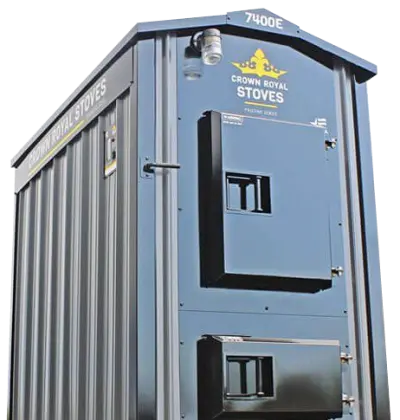
Boilers
What Is an Outdoor Wood Boiler?
Outdoor wood boilers, also known as outdoor wood-fired hydronic heaters, burn wood to heat water, which is then circulated through pipes to provide heat for homes, buildings, and other structures. They're an efficient, sustainable heat source for those in rural areas or with access to an abundant wood supply.
How They Work
Three main components do the work: a firebox where fuel is burned, a water jacket surrounding the firebox that heats the water, and heat circulation equipment that transfers that heat to the home or building's existing heating system. When the firebox is filled and ignited, the water jacket absorbs the heat, and that heated water circulates through pipes to warm the air inside.
Benefits
- Renewable: wood is a renewable, sustainable fuel source compared to oil, propane, or electric heat.
- Efficient: some models exceed 90% efficiency, using less fuel for the same heat output.
- Cost-effective: for those with access to wood, fuel costs are typically lower, and the systems are relatively low-maintenance.
- Comfortable: consistent, even heat throughout the home or building.
- Safe when installed correctly: proper setback distance, ventilation, and chimney systems keep risk in line with any other heating system.
What to Consider When Choosing One
- Fuel efficiency — a higher rating means lower fuel costs and emissions.
- Capacity — sized to your home or building's actual heating needs.
- Durability — high-quality materials and a well-constructed firebox.
- Cost — both the upfront price and ongoing fuel/maintenance costs.
- Ease of use and maintenance — clear instructions and available replacement parts.
- Safety features — automatic shut-off, over-temperature protection, fireproof construction.