Boilers
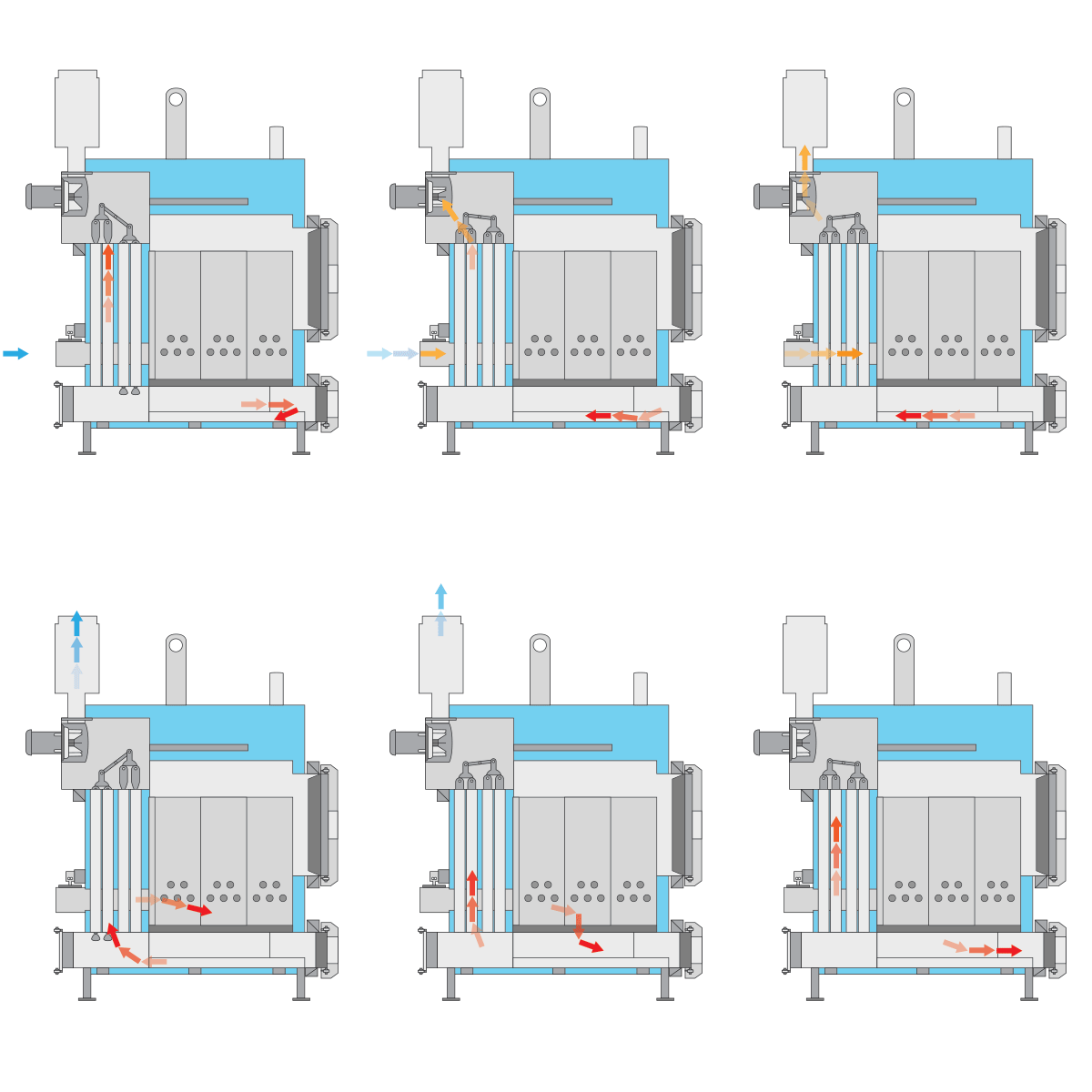
Wood Gasification Process
Wood gasification converts biomass — specifically wood — into a combustible gas known as producer gas, which can fuel anything from an internal combustion engine to a reburn cycle in a boiler that increases heat output. It's gained popularity as a clean, renewable, cost-effective alternative to fossil fuels.
The Five Stages
Drying: wood must be completely dry before gasification — moisture leads to incomplete combustion and tar production.
Pyrolysis: wood is heated in the absence of oxygen (roughly 300–500°C) to produce a mixture of carbon monoxide, hydrogen, and methane.
Gasification: the pyrolysis gases are heated further (roughly 800–1200°C) in the presence of a limited amount of oxygen to produce producer gas.
Cleaning: if the gas will be stored (for example, to run an engine), it's cooled and filtered to remove tar, particulates, and other impurities.
Combustion: the producer gas is burned to produce heat for buildings, electricity, or vehicles.
Updraft vs. Downdraft Gasifiers
Updraft gasifiers are the simplest and oldest design, burning wood from the bottom up with air drawn in from the top. They're relatively inexpensive and can reach efficiencies up to 80%, but tend to produce more tar and require a constant supply of dry fuel.
Downdraft gasifiers burn wood in a chamber split into an upper combustion zone and a lower pyrolysis zone — air enters through nozzles at the top, and the resulting gas travels down through the hot pyrolysis zone, burning off most of the tar in the process. This produces a cleaner, higher-quality gas, with some systems reaching efficiencies up to 99%, though the design is more complex and costly to build. This is the approach behind EPA-certified gasification boilers like Crown Royal's Pristine Series.
Wood Quality Matters
The species, moisture content, size, and ash content of your wood all affect gasification performance. Dense hardwoods with low ash content (oak, maple, beech) generally outperform softwoods. Wood should be seasoned to around 20% moisture or less, and cut into uniform pieces for even combustion. Contaminants like dirt, rocks, or metal can damage the boiler and should always be kept out of your wood supply.